We Are All “Others”

Lately, I’ve seen many disturbing social media posts that vilify, demean, shame, and lie about immigrants or people of different cultures, religions, political philosophies, sexual orientation — basically, anyone considered by some to be “the other.”

Most of these posts attempt to inspire fear of “the other.”

The fear-mongering, especially recently about Muslims, reminds me of the propagation of fear of Japanese Americans after the bombing of Pearl Harbor.

Common Racist Rhetoric – World War II Fear-Mongering

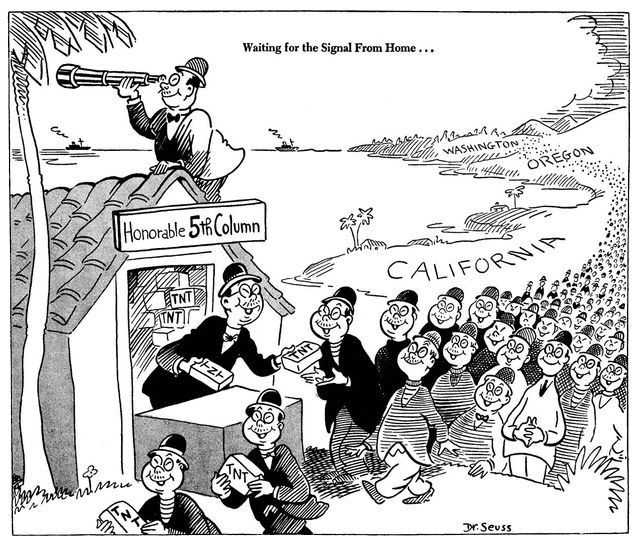
1. “Japanese Americans are spies waiting to strike.” – Propaganda portrayed Japanese Americans as secret agents preparing sabotage on the West Coast. Dr. Seuss’s 1942 cartoon depicted them lining up to receive explosives, implying coordinated espionage. https://en.wikipedia.org/wiki/Propaganda_for_Japanese-American_internment

2. “They are a fifth column.” – Shortly after the Japanese attack on Pearl Harbor, various prominent U.S. government officials, military leaders, journalists, and public figures—most notably, Secretary pf the Navy Frank Knox and General John DeWitt, Head of the Western Defense Command, falsely labeled Japanese Americans as a “fifth column” to justify wartime mass incarceration. https://encyclopedia.densho.org/The_Fifth_Column_on_the_Coast/

3. “A Jap’s a Jap — loyalty doesn’t matter.” – DeWitt’s infamous statement asserted that race alone determined loyalty, implying that even U.S.‑born citizens were inherently dangerous. https://text-message.blogs.archives.gov/2013/11/22/a-slaps-a-slap-general-john-l-dewitt-and-four-little-words/

4. “They are racially unassimilable.” – Propaganda framed Japanese Americans as biologically incapable of loyalty or assimilation, reviving older “Yellow Peril” tropes. https://digitalgallery.bgsu.edu/student/exhibits/show/race-in-us/asian-americans/the-asian-as-unassimilable-

5. “They are sneaky, secretive, and treacherous.” – Hearst newspapers and other media described Japanese Americans as inherently deceptive, often using slurs and caricatures to portray them as untrustworthy. https://www.pbs.org/wgbh/americanexperience/features/citizen-hearst-japanese-incarceration/?utm_source=copilot.com

When the Japanese sunk as low as they did on Sunday morning they were closer to unreasoning animals than human beings… No longer will men condemn the actions of others by saying it was a “skunkish trick.” Much more damning will be the phrase “Of all the lowest Japanesish things to do.”
– “Lowest Animals Now Surpassed,” San Francisco Examiner, 12/11/1941

6. “They must be removed for national security.” – Government films and posters insisted mass incarceration was necessary to protect the nation, even though intelligence agencies recommended targeted arrests instead. Propaganda claimed Japanese Americans maintained secret allegiance to Japan, ignoring FBI findings that the community was overwhelmingly loyal.

Do any of the above photos or statements look or sound familiar? One need only substitute the nationality and it’s the same thing we’re hearing today.

This prompted me to research a variety of “others” targeted in the past. I put together the following table.

A few thoughts:

  1. As you can see by the table above, the ancestors of most Americans were once considered “the other” and endured the same kinds of prejudice and vilification as what’s happening today. Of course, this table can’t cover every group that endured injustices, like Native Americans, Germans, Jews, Palestinians, Vietnamese, etc. Nearly every major immigrant group as well as Indigenous peoples, have faced legal, social, or violent discrimination at some point in U.S. history.
  2. So much of the ugliness expressed is based on differences, whether political, religious, etc. Is someone evil or dangerous just because they are different or think differently?
  3. Is it true? Much of what’s on social media anymore is fake, and often, what’s fake has been created to inspire hate or fear — like last year’s “Haitians are eating your cats and dogs.” I trust very little of what I see on social media anymore without checking a reliable source, especially before passing it on.
  4. If a claim targets an ENTIRE group, ask who benefits from it. 120,000 Japanese Americans were interned during World War II as a result of the rhetoric inflaming the same kinds of fears I see happening today with Muslims and other people of color: “They’re going to take over our country.” No Japanese American was ever charged or convicted of espionage or spying during World War II.
  5. Knowing most of us have backgrounds where our ancestors, too, once endured injustices, what if we “returned to those shoes?” In other words, what if we tried to empathize with these people — think about their stories and who they really are, not what social media memes claim they are?

Every person has a story as complex as our own.

Photo by Dorothea Lange / National Archives and Records Administration

For more information on this video, read “Ankle monitors, arrests and lost jobs: Inside the new realities many Haitians in the US are facing.”

I often think about our history — at best, our unwillingness to accept; at worst, our vile hatred of — “the other,” and a Bible verse my dad taught me, Mark 12:31, comes to mind:

Love your neighbor as yourself.

There is no qualifier in this verse. No “Love your white neighbor,” or “Love your Christian neighbor,” or “Love your Democrat or Republican neighbor,” or “Love your U.S. Citizen neighbor.”

I wonder where we’re headed as a nation. In my opinion, hatred will destroy this country before anyone considered “the other” will.

Posted in History, immigration, prejudice, racism, Uncategorized | Tagged , , , , , , , , , , | 3 Comments

Prell & Pork Chops

This morning while Steve and I were walking Obi, he noticed a car in a neighbor’s driveway with a California tag.

“They sure came a long way,” he said.

Immediately, memories started pouring through my mind as I replied, “We used to make that trip every couple of years from California. We came to Kentucky to visit my grandparents, then we drove up to Ohio to visit my Uncle Randy and Auntie Sue.”

Obi stopped to “do his business.” As Steve stooped, green poop bag in-hand, he said, “You drove all that way? With five kids?”

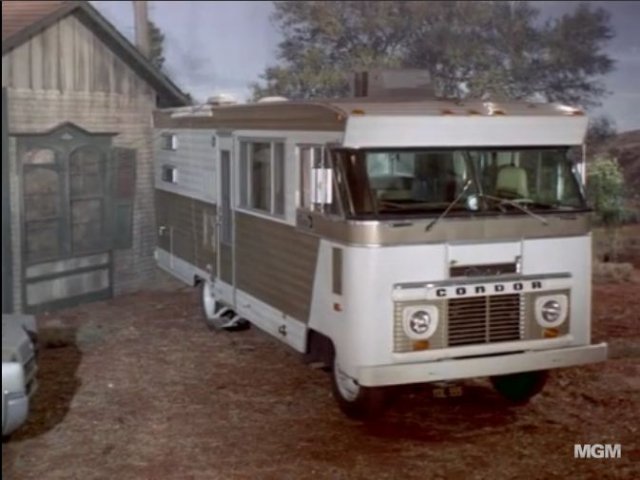
“Yep,” I replied, once again in awe of my father’s patience during those trips. “We made several trips in a station wagon, then later in a Condor motor home.” (The pictures below are not mine, but these photos are identical to what our station wagon and Condor looked like.)

I’ve written about my dad’s patience on those trips in a story called “Planet Condor.” I’ll share it below. What I’ve often thought about, but have never written about, is all the preparation my mom did before these trips.

I started to feel a little guilty that I’ve never outwardly recognized the Herculean efforts it must have taken to get five kids, a dog, and my dad ready for a cross-country trip. I’m pretty sure that’s why she often had a migraine in the first days of the trips.

“My mom was so creative,” I said as I recalled one of many clever ideas she had that helped to make the trip pleasant for everyone. “She used to save shampoo bottles for us to drink from while in the car.” Side note: This was in the 1960s and 1970s, long before Juice Boxes or Capri Sun Juice Pouches!

One-by-one, memories of my mom’s pre-trip prep work popped into my mind.

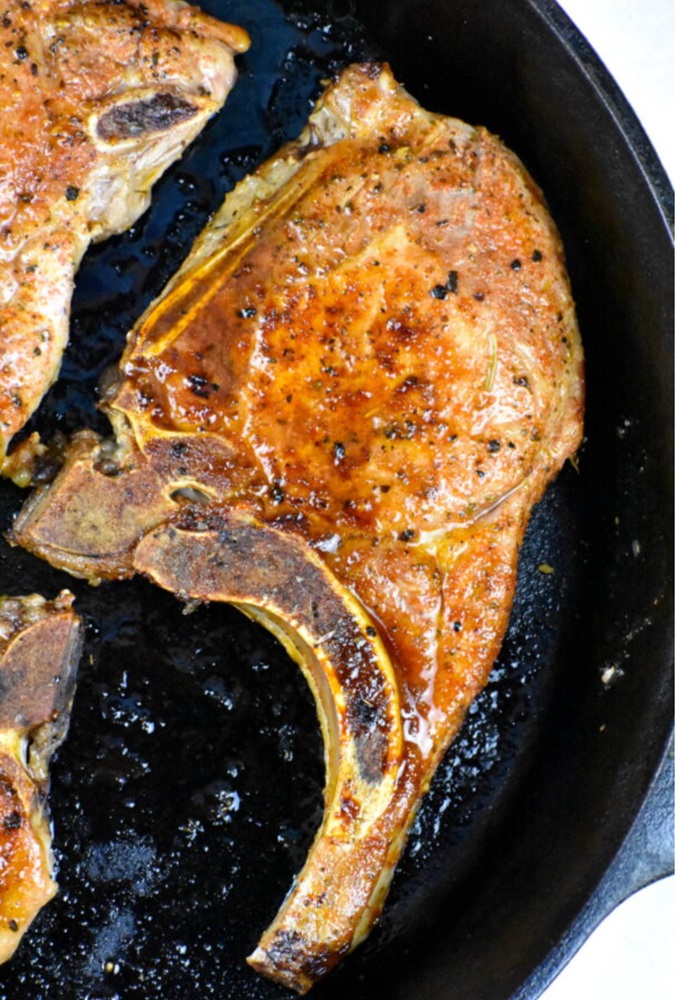
I could almost taste the pork chops she used to cook the day before our departure, smell the garlic and hear the spatter as they cooked in the cast iron pan. She always used bone-in pork chops. Not only were the bones convenient “handles” to make it easier for us to eat in the car, they also became “pork chop” suckers once all the meat was gone.

After all five of us kids had battled for who got the window seats and who got the “far, far back” seat, Dad would pull out of the driveway. Before we were even on the highway, my mouth would begin to water, as I anticipated the pork chops waiting in the ice chest at my mom’s feet.

I’m not sure what they heard more:

  • I’m hungry! When can we eat?
  • When will we get there?
  • I have to go the the bathroom!
  • Mom, she hit me!
  • There’s a Stuckey’s! Can we stop?

Back to my mom’s ingenuity. Before packaged hand wipes or hand sanitizer existed, Mom made her own. During her pre-trip preparations, she’d cut Handi Wipes into small sheets, soak them in Sea Breeze, and pack them into Tupperware containers to be placed in the ice chest.

These cool wipes were not only good for cleaning pork-chop-smeared-fingers, they were excellent wipes to cool us when the temperatures soared on summer trips. Perhaps most importantly, when my dad began to show signs of getting sleepy (opening the window, shaking his head, or starting to sing “Row, Row, Row Your Boat — yes, he’d demand we sing with him) my mom would pull one out of the ice chest and insist he wipe it over his face and neck. The coolness on his skin and invigorating scent must have been a good pick-me-up! (Even though he still insisted we sing along with him.)

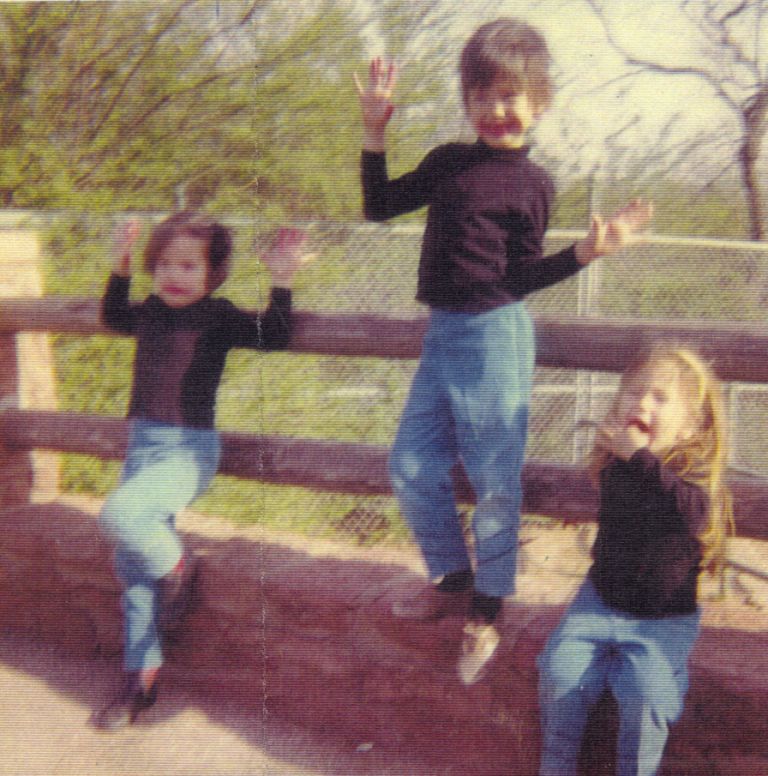
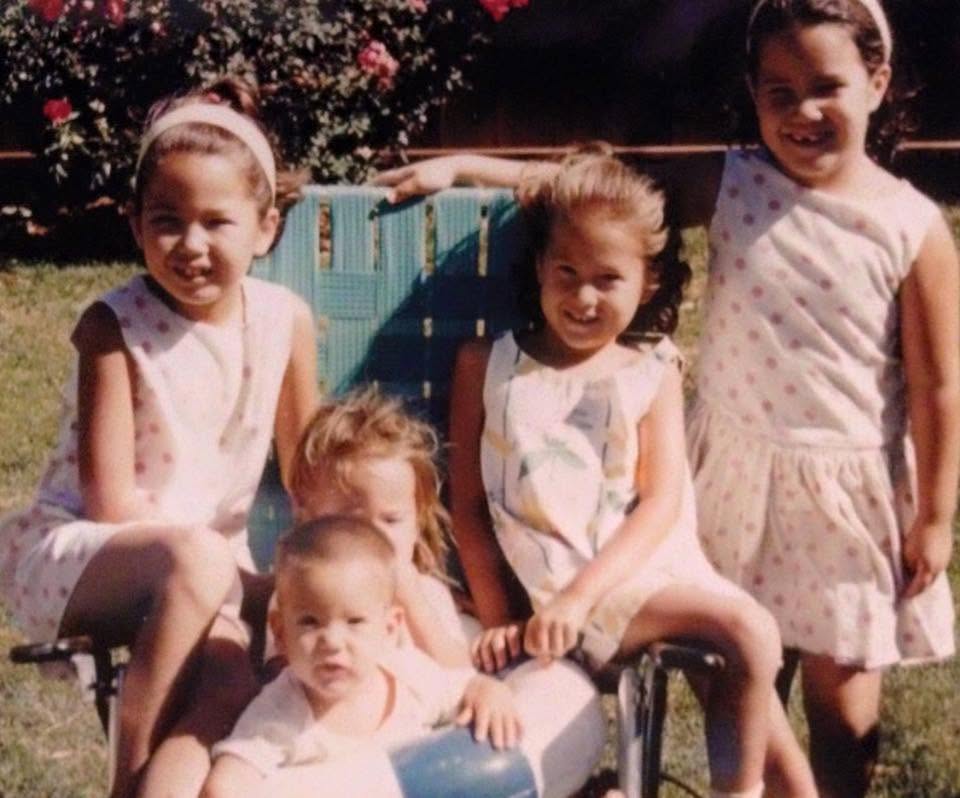
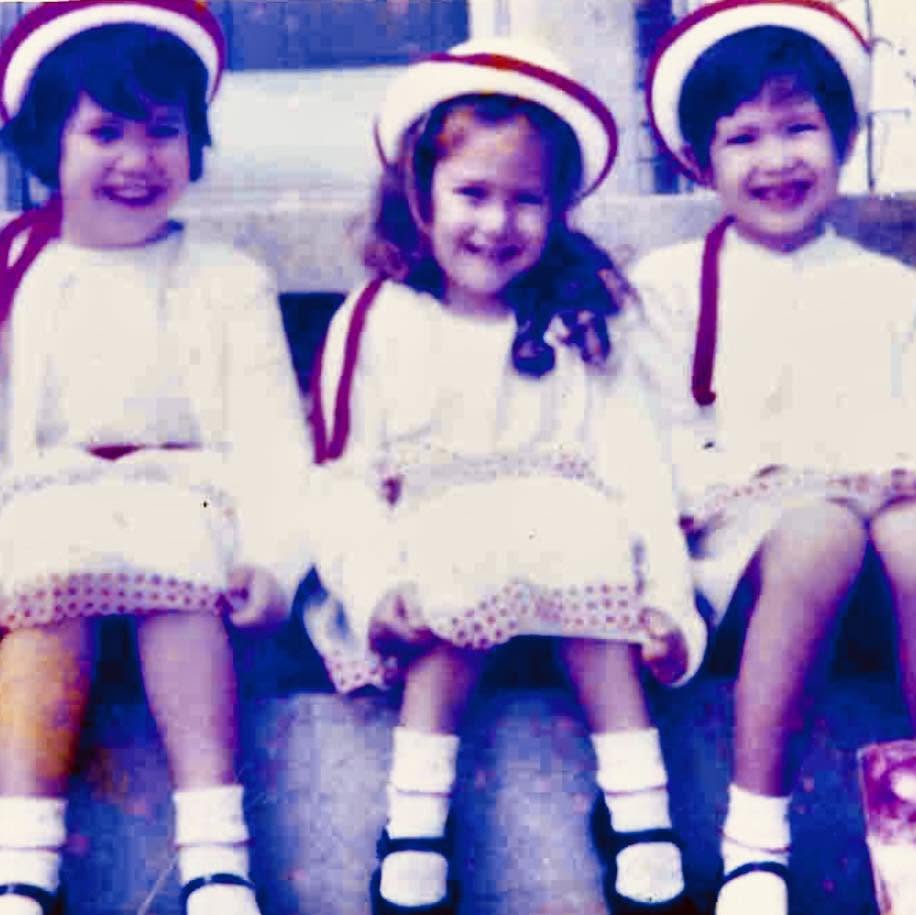
Mom used to like to dress us all alike. She often sewed dresses for the four girls and bought a matching outfit for my brother, the youngest. I fondly remember one traveling outfit she made for my sisters and me — hand-sewn summer dresses made of bright orange and pink parachute-type material. Each night in the hotel, she would wash these dresses in the bathroom sink and they’d be dry by morning. My brother wore an orange polo shirt and khaki shorts. I don’t remember what my parents wore, but knowing my mother, they were coordinated, too. I wish I could find a photo of us in those outfits, but for now, the photos below give you an idea of how well-coordinated we were!

As with many memoirs, much of my memoir revolves around my mom’s and my relationship. At times, particularly during my childhood and teen years, our relationship was rocky, and I often wonder if I’ll ever have the courage to have the story published. As with the story, Planet Condor, below, much of my memoir is written from the point of view of a child or teenage, who has little understanding or even compassion for the challenges my mom must have gone through. But know that I loved my mom, and would not want anyone to think otherwise.

With any writing I do, whether fiction or non-fiction, I always put myself into my characters’ shoes. It’s a necessity for a writer who wants to create characters with whom readers can identify.

Putting myself in the shoes of the characters in The Red Kimono and its sequel, Shadow of the White Chrysanthemum (Spring 2027 release date, University of Arkansas Press), helped me to understand how being an internee as a child must have affected my mom throughout her life, and therefore, how it affected me and my other siblings.

Now, as I am working on my memoir, I put myself in the shoes of my mom. I have begun to understand her better, to see the challenges of raising 5 children, often on her own while my father was on trips for the Air Force, all while dealing with the lingering after effects of internment.

So, whether the story is ever published or not, writing it has been beneficial. I better understand my mother, and therefore, I better understand myself.

“You know,” I said to Steve as we continued our walk and conversation. “My mom was a smart and creative woman.”

It felt good to recollect everything my mom did to prepare for our family trips. They have given me some of my happiest memories.

__________________________________________________________

Planet Condor

In the summer of 1972, my four siblings and I stood like sentries in our driveway, waiting for our father to arrive in our new motor home—a 1971 Ford Condor.   In my little girl impatient world, he seemed to take forever, but finally, FINALLY, the corrugated white box on wheels turned the corner, our goliath chariot.  The five of us jumped up and down in unsynchronized delight, clapping our hands and squealing with anticipation.

When Dad pulled into the driveway, I beamed with pride.  Surely we were the first in the neighborhood to have a motor home.

He stopped the engine and poked his head through the window.  “All aboard!”

We burst through the entryway to a chorus of “oohs” and “ahhs” for the interior’s olive green plaid upholstery and dark wood-paneling – that unmistakable look of the 1970’s.  But, it didn’t take long for that joyous chorus of excitement and awe to turn to shouts of staking claim to the myriad seats and beds.

“I get the seat by the window.”

“No way.  I got it first.”

“Top bunk is mine.”

“Uh-uh.  I claimed it first.  Mommy!” 

A week later, five eager kids, two wary adults and a newly-bathed dog piled into the Condor, and we each took the seats we’d won in battle.  Our first adventure was an 1800-mile trek from California to Kentucky to visit Grandma and Grandpa.

Halfway into the trip, Mom was attacked by one of her infamous migraines – headaches so bad they crippled her for days.  Her only solution was to pop a prescription pain killer cocktail after which she passed out in back of our house-on-wheels.

Dad dealt with it with his usual patience, half-escaped in a daydream as he drove the Condor eastward, humming You Are My Sunshine to stay awake.

We kids had our own ways of dealing.  Those headaches might have led to Mom passing out, but they were like a shot of adrenaline to the pack of five.

Like the day we came up with the brilliant idea to see if we could tip the Condor over while Dad drove along Route 66.  All five of us flung our bodies from port to starboard and back again, like wild electrons bouncing off the walls.  As we crushed back-and-forth with our combined weights, we caused a good jerk, but we never did tip it over.

Dad kept his nose to the steering wheel, apparently oblivious.  Mom, under the influence of a medically-induced nonchalance, didn’t seem to care either.  And their five children?  We were hardly sympathetic.

We were bored, bored, bored – not a good thing on Day Three of a five-day trip.  We rummaged through drawers, cabinets, and glove compartments for things to do, and found Mom’s nylon hosiery.  Pulling them over our heads, we looked like juvenile bank robbers.  In the closet, we found Mom’s Twiggy wigs and put them on.  The Fab Five – a bad imitation of the Beatles.

We looked odd, but not odd enough.

“Here’s some oranges,” my brother said, his head poked in the mini-fridge.  It was just the touch we needed – orange bug-eyes!  We stuffed them under the nylons and over our eyes, and voila!  An appearance to match our behavior – creatures from another planet.

When the time came to share our talents with fellow-travelers on adventure’s highway, we each took turns at the stern of the Condor, where our stage was a large square window to the outside world.  Our audience was any car “lucky” enough to drive behind us.  Each of us took our place atop the toilet and performed, bouncing our heads back and forth like bobble-heads from Planet Condor.  Our sides ached with laughter at each performance, while we mentally calculated how to outdo the previous act.

Dad kept driving, trying to distract us by encouraging a round of Row, Row, Row Your Boat.

Mom kept sleeping.

That night, as we settled into an RV Park in Oklahoma, lucidity began to return to our mom, though she remained hazy from the residual medication.  Trapped with her alien children in a now too-tiny box for three days, she was ready to leave Planet Condor.

Dad, however, suggested her night gown was probably not the appropriate attire for going out.  Alas, this was lost in translation.  She demanded he take her out to dinner or she’d walk home.

My youngest sister asked, “Daddy, isn’t it too far for Mommy to walk from Oklahoma to California?”

The next morning, the monster headache was gone, and Mom proceeded to pull travelling outfits she’d sewn for us out of the Condor’s tiny closet.  Dressed identically, we looked like the American version of the Von Trapp family singers when we arrived at Stuckey’s for breakfast.  By all appearances, we were the perfect family.  

Now that Mom was alert, we morphed from aliens to angels.  She expected and received perfect behavior.  After all, we each knew the wrath of her pinchy fingernails should get any ideas of returning to our alien forms.  No matter where we went, the lucky one sitting next to her was always the best-behaved.

After pancakes, scrambled eggs, a spilled orange juice and three trips to the restroom, we left the restaurant and prepared to hit the road again – two weary adults, followed by their five raring-to-go children.  There couldn’t be a more perfect-looking family on Earth.

But on Planet Condor, perfection didn’t exist. 

Posted in Family, memoir, mom, nostalgia, travel | Tagged , , , , , , , | 1 Comment

The Pledge of Allegiance – Part 1

Library of Congress (Dorothea Lange)

During a recent trip to visit my daughter and her family, my granddaughter, Penelope, was excited to show me that she’d learned The Pledge of Allegiance.

As I watched and listened, I wondered how long it had been since I recited the pledge — decades? Penelope is only 3 (though she always insists I add, “and-a-half!”), so I’m pretty sure she doesn’t understand the meaning behind the words. Admittedly, nor did I when I first memorized the pledge. My fellow classmates and I would rotely recite the words each morning, with hardly a thought to their meaning.

But as I listened to Penelope, several phrases caught my attention and inspired me to think more deeply about the pledge. So, over the next couple of weeks, as we approach the 250th anniversary of our independence, I’ll post my thoughts on a few of those phrases.

I’ll start with a post about the history of the Pledge of Allegiance.

The very first pledge was written in 1885 by Union Army officer, Captain George Thatcher Balch:

“We give our heads and our hearts to God and our country; one country, one language, one flag.”

According the History.com, “Several schools adopted Balch’s pledge, but it was soon supplanted by a salute composed by Francis Bellamy, a Christian socialist and former Baptist minister. In 1892, while working for a magazine called The Youth’s Companion, Bellamy was enlisted to write a new pledge for use in patriotic celebrations surrounding the 400th anniversary of Christopher Columbus’s arrival in the New World. The magazine partnered with schools to encourage flag ceremonies and sold American flags as part of the initiative.”

Even Bellamy’s version underwent many changes over the years:

Interesting Tidbits:

  • According the History.com, prior to 1942 when Congress officially adopted the pledge and decreed it should be recited while holding the right hand over the heart, the pledge was recited using a “Bellamy salute,” where the right arm was extended toward the flag with the hand outstretched. Sound familiar?

. . . but with the rise of fascism in Europe, many felt the gesture too closely resembled a Nazi salute. ~ History.com, Evan Andrews

  • Today, 46 states require public schools to recite the pledge. The four states that do not are Hawaii, Iowa, Vermont, and Wyoming. (SmithsonianMag.com, Amy Crawford)
  • In a case brought by Jehovah’s Witness families in 1943, (West Virginia State Board of Education v. Barnette,) the U.S. Supreme Court ruled that public schools could not force students to recite the pledge or salute the flag.

    UP NEXT: Thoughts on the phrase, “I pledge allegiance to the Flag . . .”

    Posted in 4th of July, Family, flag, History, patriotism, Pledge of Allegiance | Tagged , , , , , , | 3 Comments

    Unrequited #3 – Fair Winds

    Many of you know I’ve been working on a memoir for the last couple of years. My working title is Unrequited. As you might guess from the title, the book is about unrequited love. I’ve had many loves in my life. Three were, and are, unrequited.

    As with most first-time memoirists, I often have to keep recurring thoughts at bay. They are like sludge in my writing engine.

    • THOUGHT #1: Why would anyone be interested in my story? In the end, I’ve decided it doesn’t matter. It’s been a journey of self-discovery for me. Perhaps reading it will be a journey of discovery for readers, too.
    • THOUGHT #2: Will I, a recovering “good-girl-perfectionist” ever have the nerve to actually publish it, to show my flawed, human self? – This is the biggie, mostly because I haven’t yet conquered the rampart of wanting to be perfect in my kids’ eyes.

    My solution to THOUGHT #2 is to release bits and pieces as my courage allows, to test the proverbial waters. Perhaps if I take baby-steps, my courage will grow until, once it’s complete and ready to be published, I will be, as my friend Ruth calls me, Samurai Jan — fearless.

    Some posts will be excerpts, and other posts, like this one, will be thoughts about the memoir, or something I’ll share that represents one of my three “Unrequiteds.”

    You may wonder how I can write this memoir while married. “What does you husband think?” Many have asked me that question. “How does he feel about you thinking about these three men?”

    Let me just say, I could not write this memoir without Steve’s support. There is nothing he doesn’t know about my past, and nothing he doesn’t know about my feelings. We often have conversations about the importance of “AND” in life. He understands that I can still have the feelings I have AND love him. It’s not a case of EITHOR/OR. In fact, I love him more because he understands me. We’ve had many conversations about these three unrequited relationships and how they’ve shaped my life. I’m grateful for our openness and for his support.

    I have not gotten absolute permission from the Unrequiteds to use their names yet. (More like, “Maybe. We’ll see.”) Once the memoir is complete, I will ask Unrequited #1 and Unrequited #2 about using at least their first names — after they’ve had a chance to read what I’ve written. Sadly, I will not be able to get that permission from Unrequited #3, as he took his own life in 2015.

    I’ve completed the first drafts for Unrequited #1 and Unrequited #2. In the past few months, I’ve been working on Unrequited #3’s story. As you might imagine, it’s the most painful to write. #3 and I wrote countless emails to each other during our relationship, and I still have them, though I haven’t really gone through them for many, many years, perhaps back to 2003.

    Reading through them takes a lot of emotional energy, leaving me with little energy or desire to put words on paper for the memoir. Finding letters I’d forgotten about is like reliving the joy of the beginning of the relationship, as well as the “out-of-synch” desperation we each felt at the end. It was an end neither of us wanted, but an end neither of us could see our way around. It’s also like reliving his suicide again, the same feeling of guilt and helplessness, of so many questions, of never and forever. At times, I’ve even had the same feeling I had when I learned he had died — the feeling of having the breath sucked out of me.

    While reading through old letters and writings, I found this poem I wrote shortly after his death. I don’t know if I’ll use it in the memoir, but I’ll share it with you now. #3 and I shared a love of sailing. He taught me to sail, thus the sailing metaphor.

    Fair Winds
    
    Beyond the shallow reef,
    the deep sea beckoned,
    and he set out to sea
    in the sailboat he loved,
    the sailboat they’d shared.
    
    He headed toward a setting sun
    so intense with color,
    he thought he might reach it.
    There at last, he’d end
    his long, lonely drift
    through the interminable inlet
    where years before
    he’d made a wrong turn.
    
    Clouds billowed above as he cursed
    the unwelcome intruder that blasted
    through his once-impenetrable wall –
    the thought of her.
    
    It was preposterous that
    he could ever keep her out.
    She was mixed in the very mortar
    that fortified his thorny wall.
    The last remnants of sunlight
    touched his skin as
    his weary bones drank the warmth.
    
    Only a little farther and
    he’d kill the engine,
    the incessant, droning chug-chug,
    the foul smell of diesel.
    
    And at last, he’d succumb to the wind,
    his greatest teacher, a simile for life yet,
    he’d been a poor student,
    so he leaned forward toward
    the outskirts of the key,
    as if he could rush the wind.
    
    He should have said goodbye.
    She would wonder why he left,
    but what could he say?
    Once they’d shared countless words,
    once no words were necessary.
    He should have left a note,
    but there were no words.
    
    Fog rolled in and melancholic blue waves
    lapped against the hull,
    cooing as they rocked the boat
    and lulled his soul. “Here. Here.”
    
    He steadied the rudder,
    hand hovering over the kill switch,
    keen for the silence he longed
    to have enfold him.
    
    He should have left a note.
    Her heart would break that he hadn’t,
    but there were no words
    
    The main sail shuddered,
    teased by the wind.
    From the corner of his eye,
    a blink of light on the port side –
    the last buoy,
    rocking back and forth,
    its bell echoing in thick fog.
    
    Fare-well. Fare-well.
    
    Inhaling the salt-air perfume,
    once, twice,
    he was primed for the wind’s silence.
    Yet his rumination of her
    interrupted once again,
    until he implored his fingers
    to turn off the engine,
    turn off the noise.
    They obliged.
    
    No words.
    No goodbye.
    Only silence.
    
    
    Posted in love, memoir, nostalgia, suicide, Uncategorized | Tagged , , , , , , , , | 8 Comments

    Memoir Tidbit #1 – Kiss Me Much

    Funny how working on a memoir can trigger memories. It’s as if writing about my life fertilizes the soil of my soul, opening my mind and heart to stimuli that brings new memories to bloom.

    With the first notes of the melody, I was whisked back to a time when I was maybe twelve years old. Back to Fairfield, California. Back to my living room with the green shag carpet and the gold tweed sectional where I sat and listened to my mom practice that very song in preparation for a performance with the community theater, The Belfry Players.

    I was in awe of my mother’s voice. Though at twelve, I’m not so sure I knew the meaning of the word, “sultry,” as I think about her voice now, I would describe it as sultry, yet sweet and full of longing. And there was no better song for her to spotlight the characteristics of her voice that “Bésame Mucho.”

    So, I asked her what the lyrics meant. What I most remember was the translation of the title: Kiss Me Much.

    Oh, yes. Longing. In the words of the song, the way my mother’s voice surrounded me, I knew my she felt the longing, and I felt it, too.

    She must have missed my father, who spent so much time away on his Air Force trips. Seeing my mother’s longing throughout much of my childhood, I sometimes wonder if it planted a seed of longing in me, too — a perennial flower that blossomed, died and blossomed again, many times throughout my life.

    Through much of my childhood, we all missed my dad when he was away. We longed for his return, when everything at last, would be right with my mom and right with our world.

    My mother performing Bésame Mucho

    Posted in Family, love, memoir, nostalgia | Tagged , , , , , | 2 Comments